Equality, Diversity and Inclusion in Healthcare
Interview favourite EDI questions come up at most NHS interviews
A commitment to equality, diversity and inclusion is on almost every NHS person specification — and a favourite interview question. Know the law, the NHS context and how to show it in practice.
- The Equality Act 2010 explained simply, including the stronger harassment duties from 30 October 2026
- Practical skills: reasonable adjustments, health inequalities, being an active bystander
- Support and strategies for international doctors — and model interview answers
- Format
- 6 short modules · about 10 min each · stop and come back any time
- Slides
- 22
- Quiz
- 15 questions
- Pass mark
- 12/15
- Studying
- Free
- Certificate
- £5 after you pass
or save up to 60% with a bundle - Last reviewed
- October 2026 · how we check our courses
Free sign-up with your email unlocks this course and every other course, and your progress is saved on this device. When you pass, get your certificate for £5 — evidence for your CV, appraisal and interviews.

Finish with evidence you can show
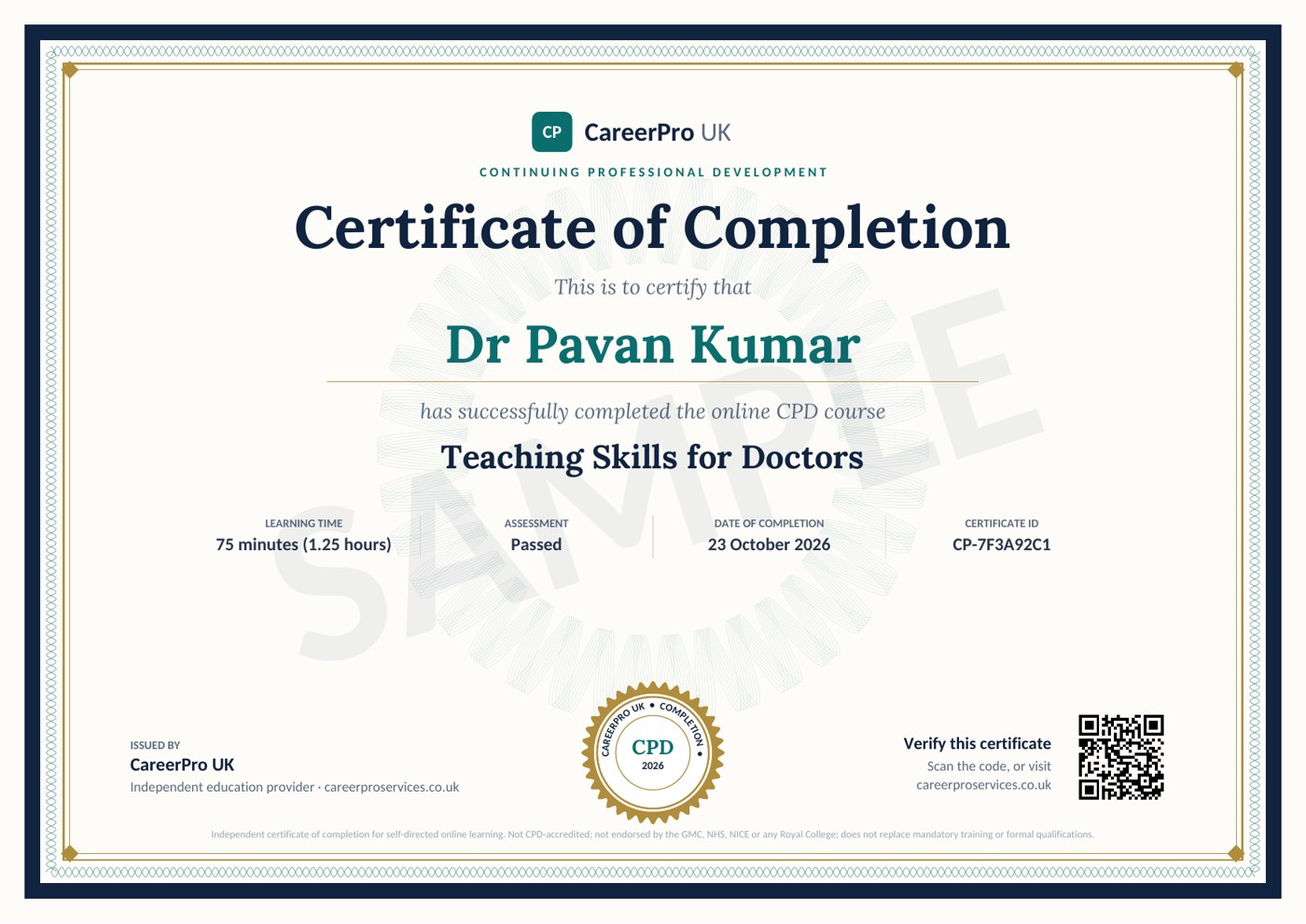
Complete the course and pass the short quiz to earn a certificate of completion you can show to shortlisters, appraisers and interview panels.
- A verifiable certificate with a QR code — for your CV, portfolio and appraisal
- An appraisal-ready reflective note, pre-filled with the learning outcomes
- A ready-made CV line and a supporting-statement paragraph for NHS Jobs and Trac
- Add it to your LinkedIn profile in one click
- Pay £5 only at the end, and only if you pass — or save with a bundle
Almost every NHS person specification asks for a commitment to equality, diversity and inclusion, and 'What does equality and diversity mean to you?' is a common interview question. This practical course explains the Equality Act 2010 and the nine protected characteristics, types of discrimination, reasonable adjustments, health inequalities, unconscious bias, bullying and sexual harassment (including the stronger employer duties from 30 October 2026), being an active bystander, and what NHS and GMC data show about fairness for international and ethnic minority doctors — with real scenarios and model interview answers.
What you'll learn
- Explain equality, equity, diversity and inclusion, and why they matter for patients and staff
- Name the nine protected characteristics and the main types of discrimination under the Equality Act 2010
- Describe the public sector equality duty and employers' duties on sexual and third-party harassment
- Make reasonable adjustments and reduce health inequalities in your own practice
- Recognise unconscious bias, microaggressions, bullying and harassment — and respond as an active bystander
- Describe what NHS and GMC data show about fairness for international and ethnic minority doctors, and where to get support
- Treat every patient and colleague with dignity, in line with Good Medical Practice and current law
- Answer EDI interview questions with real examples
Course outline
1Foundations: what EDI means
- Welcome — why EDI matters — The NHS serves, and employs, one of the most diverse populations in the world.
- What EDI looks like in everyday NHS work — It is easy to agree with EDI in principle and still miss it in practice, because unfairness is rarely dramatic.
- Equality, equity, diversity and inclusion — These four words are often used together, but they mean different things, and interviewers often ask candidates to explain the difference.
- What the GMC expects — For doctors, fairness is not just a legal duty — it is part of your professional standards.
2The law: Equality Act 2010
- The Equality Act 2010 — nine protected characteristics — The Equality Act 2010 brought many older anti-discrimination laws together into one Act. It applies to employers, including the NHS, and to anyone who provides services to the public, including hospitals and GP surgeries.
- Types of discrimination — The Equality Act describes several kinds of prohibited conduct. Knowing the differences helps you recognise unfairness that is not obvious, and describe it accurately if you need to raise a concern.
- Public sector duty, positive action and harassment duties — As well as banning discrimination, the law places positive duties on organisations.
- Sex and gender reassignment — the 2025 Supreme Court ruling — In April 2025 the UK Supreme Court ruled (For Women Scotland v The Scottish Ministers) that 'sex' in the Equality Act 2010 means biological sex.
3Fair care for patients
- Health inequalities — Health inequalities are unfair, avoidable differences in health between groups. In England, people in the most deprived areas live many fewer years in good health than those in the least deprived.
- Reasonable adjustments and accessible information — A reasonable adjustment is a change to the way you usually do things so that a disabled person is not put at a substantial disadvantage.
- Dignity, culture and beliefs — Patients bring their culture, faith and life experience into every consultation. Good doctors do not need to be experts in every culture — that is impossible.
4Fair workplaces
- Unconscious bias and microaggressions — Everyone has biases. Our brains use quick mental shortcuts to make sense of the world, and those shortcuts are shaped by our upbringing, the media and our experiences.
- Bullying, harassment and sexual safety — Bullying and harassment are common in the NHS, and they harm staff and patient safety.
- Being an active bystander — When people see something wrong in a group, they often do nothing — not because they don't care, but because they assume someone else will act, they are unsure whether it was really a problem, or they worry about the consequences, especially if the person behaving badly is senior.
- Measuring fairness in the NHS — Good intentions are not enough to show that an organisation is fair.
5International doctors: challenges and support
- International and ethnic minority doctors — what the data show — International medical graduates make up a large and growing share of the UK medical workforce, and the NHS depends on them.
- When patients or visitors are racist or abusive — Being abused by a patient because of your race, accent, religion or nationality is upsetting, and many international doctors experience it.
- Thriving as an international doctor — and supporting others — Moving to the NHS means learning a new health system, a new set of unwritten rules and often a new way of working in teams — while also dealing with a new country, perhaps away from family. It is normal to find this hard at first.
6Your evidence: CV and interviews
- EDI interview questions — EDI questions are common at every level of NHS interview, from clinical fellow posts to specialty training and consultant appointments. Panels are not looking for a definition read from a textbook.
- Evidence for your CV and portfolio — Shortlisters see 'committed to equality and diversity' on almost every application, so on its own it carries no weight. What makes you stand out is evidence: things you have completed, done or led, ideally with a result.
- Using this course in your NHS application — Shortlisting for NHS posts is usually done by scoring your application against each criterion in the person specification, which are listed as essential or desirable.
- Summary — EDI is not a separate subject from good medicine. It is part of giving safe, effective care to every patient and working well in every team.
Frequently asked questions
Is the Equality, Diversity & Inclusion course free?
Yes. The Equality, Diversity & Inclusion course is free to study online after a quick free sign-up with your name and email. Studying is free. If you want a certificate of completion, it costs £5, and you pay only after you pass the quiz.
Who is this course for?
Foundation — for doctors at every grade, including international medical graduates. It is written for NHS doctors and international medical graduates (IMGs).
What will I learn?
You will be able to: explain equality, equity, diversity and inclusion, and why they matter for patients and staff; name the nine protected characteristics and the main types of discrimination under the Equality Act 2010; describe the public sector equality duty and employers' duties on sexual and third-party harassment; make reasonable adjustments and reduce health inequalities in your own practice; recognise unconscious bias, microaggressions, bullying and harassment — and respond as an active bystander; describe what NHS and GMC data show about fairness for international and ethnic minority doctors, and where to get support; treat every patient and colleague with dignity, in line with Good Medical Practice and current law; answer EDI interview questions with real examples.
How long does it take?
The course has 6 short modules of about 10 minutes each, and your progress is saved so you can stop and come back. Your certificate records your learning time for your appraisal portfolio.
Is the course accredited?
Online course — does not replace your employer's mandatory equality and diversity training. The certificate confirms completion of self-directed learning, which you can record in your appraisal portfolio with your own reflection.
Can I use it in my NHS job application?
Yes. List it under 'Courses and CPD' on your CV and in the education or training section of your NHS Jobs or Trac application, and use what you learned as evidence in your supporting statement. The certificate has a QR code so shortlisters can verify it.
✍️ Writing your NHS supporting statement? See an example paragraph for this criterion and examples for every other common person specification point.
Independent study guide by CareerPro UK, reviewed October 2026. About this course
This is an independent study guide to equality, diversity and inclusion for doctors, written in our own words from publicly available UK law and guidance. It is not legal advice and does not replace the equality and diversity training your employer requires. Equality law and guidance continue to develop — follow your organisation's current policies and seek advice from HR, your union or your medical defence organisation about specific situations.
CareerPro UK is an independent education provider. Our courses are not produced, endorsed, approved or accredited by the General Medical Council (GMC), the NHS, NICE, any Royal College or any other official body, and we are not affiliated with them. Courses are study guides written in our own words from publicly available guidance. They do not replace the official guidance, which can change — always check the current version (e.g. at gmc-uk.org and nice.org.uk). They are not legal or professional advice: for a specific situation, follow your employer's policies and speak to your seniors or your medical defence organisation.
Quiz
Answer all 15 questions. You need 12 correct to pass. You can retake it.
Get your certificate
Your certificate is ready
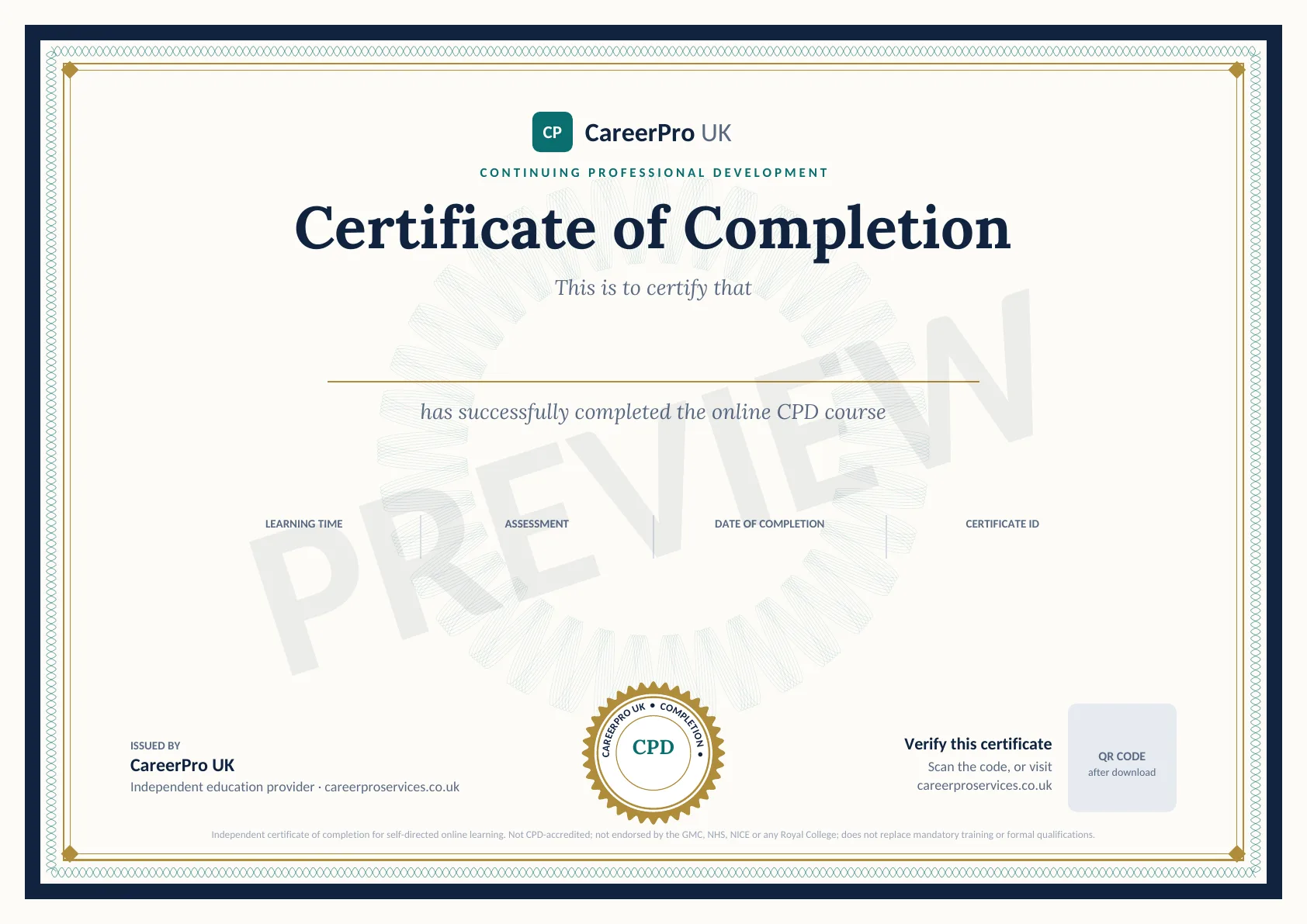
- Your verifiable PDF certificate with a QR code, so shortlisters and appraisers can check it's genuine
- A ready-to-paste line for your NHS Jobs or Trac application and your CV
- An appraisal-ready reflective note, pre-filled with the course's learning outcomes and your CPD time
- One-click add to your LinkedIn profile
The course itself is free. The certificate pack is a one-off £5, with no subscription. Payment is handled securely by Stripe, and we never see your card details.
Have a bundle code?
Taking several courses? Save with a certificate bundle — from £27 for 6 certificates.
Well done — you've passed
Keep the PDF — its QR code lets an appraiser or employer confirm it's genuine.
Independent certificate of completion; not CPD-accredited or endorsed by the GMC, NHS or any Royal College.
Write a quick reflection for your portfolio
Appraisers value reflection more than certificates. Jot down a few lines while it's fresh — it stays on this device until you copy it.
Free sign-up to start this course
Sign up once with your email and you can study every course free. Your certificate is optional and paid only after you pass.
We use your details to give you access to the courses. See our privacy notice.
Get new courses and NHS job alerts
Optional — leave your email if you'd like us to tell you about new CPD courses, NHS job alerts and career support. You can unsubscribe at any time.
See our privacy notice.